

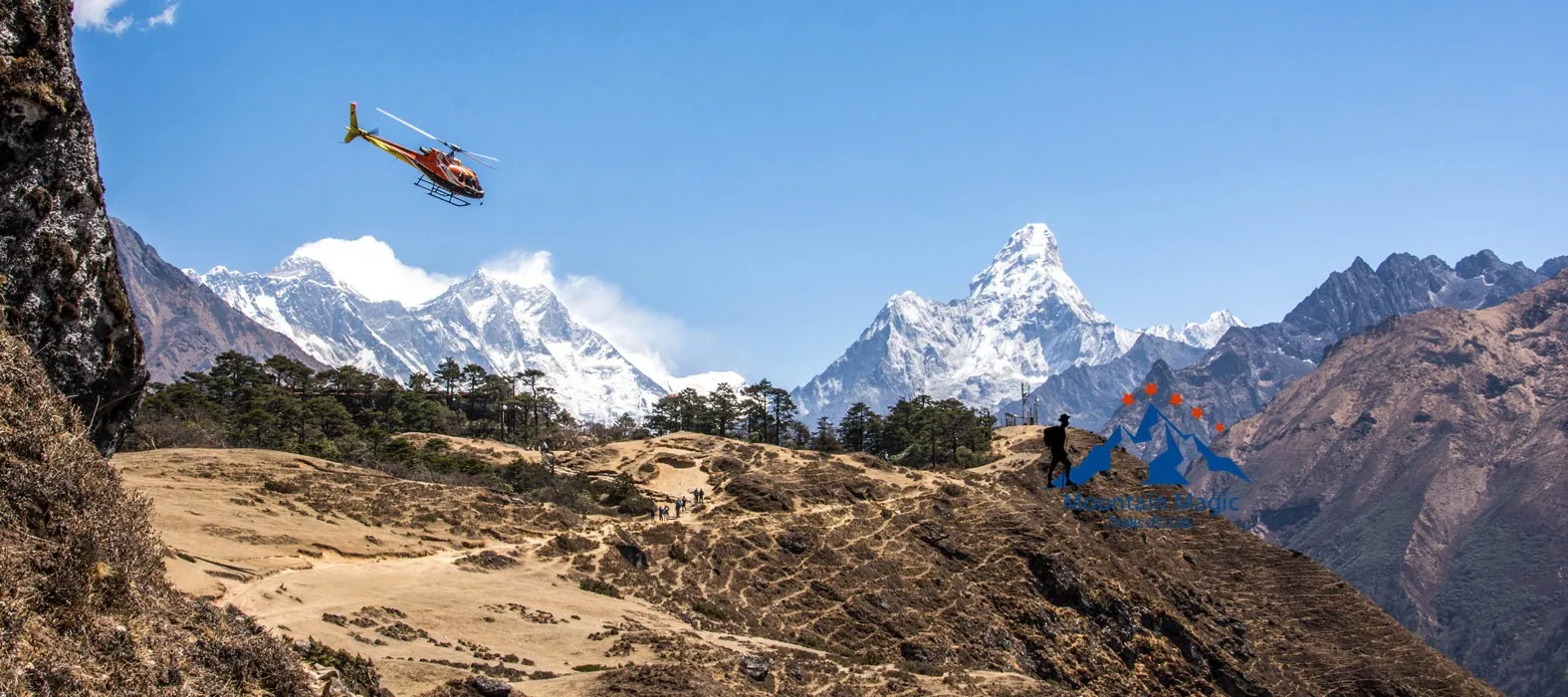
The Everest region does not look the same from start to finish. The trail begins with green hills, forests, rivers, and small villages. A few days later, the trees become thinner, the air feels colder, and the landscape turns rocky and wide.
This gradual change is one of the best parts of the Everest Base Camp Trek With Helicopter Return. You do not simply arrive at a high mountain. You slowly enter a completely different environment.
The listed itinerary takes 10 days and includes acclimatization stops in Namche Bazaar and Dingboche before reaching Everest Base Camp and Kala Patthar.
The Lower Trail Feels Surprisingly Green
The journey toward Everest starts around Lukla. The first walking section toward Phakding passes through green hills and follows the Dudh Koshi River.
At this point, the trail may feel more like a normal mountain hike than a high-altitude adventure.
Enjoy the Forest While It Lasts
The lower Khumbu has trees, small streams, stone houses, and cultivated land.
You may also see prayer flags, small monasteries, and suspension bridges along the route.
Take time to enjoy this section.
The landscape will change later, and you may be surprised by how much you miss the greenery once you reach the higher valleys.
Namche Is Your First Big Change
The walk from Phakding to Namche Bazaar is longer and includes a major uphill section.
Namche sits at about 3,440 meters and is an important acclimatization point on the route. The itinerary provides two nights here, including a rest day.
Your Breathing May Feel Different
You may notice that climbing stairs or walking uphill requires more effort.
That is not unusual.
Do not respond by trying to walk faster. Slow your pace and give your body time to adjust.
The acclimatization day is there for a reason.
The Trail Starts Losing Its Trees
After Namche, the route continues toward Tengboche and then Dingboche.
The scenery becomes more open as you gain altitude.
You will see fewer thick forests and more exposed slopes, large peaks, and wide valleys.
Notice the Change in Sound
The higher you go, the quieter the surroundings can feel.
The sound of traffic disappears. Instead, you hear wind, footsteps, rivers, and the occasional sound of people moving along the trail.
This quiet can be one of the most peaceful parts of the journey.
Do not fill every silent moment with music or phone calls.
Let yourself experience it.
Tengboche Brings a Different Kind of Beauty
Tengboche sits at around 3,860 meters and is known for its Buddhist monastery.
The village also has impressive views of the surrounding mountains. The listed itinerary allows about five to six hours for the walk from Namche.
Look Beyond the Mountain Views
The monastery gives you a chance to see another side of the Everest region.
The Khumbu is not only about trekking and climbing. Buddhist traditions and Sherpa culture are closely connected to everyday life here.
If you visit the monastery, follow local rules and behave respectfully.
A short visit can add much more meaning to your trip.
Dingboche Is Where Altitude Becomes Serious
Dingboche is located at around 4,410 meters.
By now, the difference in altitude can become much easier to notice.
Walking may feel slower. You may need more breaks. Even simple tasks can take longer.
The itinerary includes another acclimatization day here, with an optional hike toward Nangkartshang Peak.
Stop Measuring Yourself by Speed
This is where many trekkers make a mistake.
They see another person walking faster and assume they should do the same.
That is unnecessary.
High altitude affects every person differently. Your goal is not to beat another trekker.
Your goal is to reach the destination safely while keeping enough energy for the days ahead.
The Air Gets Colder and Drier
As the route moves toward Lobuche, the landscape becomes much more rugged.
The air is colder, vegetation is limited, and the trail passes through rocky areas near the Khumbu Glacier.
Protect Your Skin
The cold and dry air can leave your lips and skin uncomfortable.
Carry lip balm and moisturizer.
Sunscreen is also important because strong sunlight at high altitude can affect exposed skin even when the air feels cold.
Small items like these can make long trekking days much more comfortable.
Lobuche Feels Like Another World
Lobuche is around 4,900 meters above sea level.
The route from Dingboche becomes more serious, but it is also filled with impressive views of peaks and glaciers.
The trail passes the Thukla area, where memorials honor climbers who died in the Everest region.
Take a Quiet Moment at the Memorials
The memorials are a reminder that the Himalayas are not simply a beautiful backdrop.
Mountains at this height can be dangerous.
Take a moment to read the names and appreciate the risks faced by climbers and mountain workers.
Then continue at your own pace.
Gorakshep Is the Final Base Before Everest
The route from Lobuche continues toward Gorakshep before reaching Everest Base Camp.
Gorakshep sits at roughly 5,125 meters, so the effects of altitude can be strong.
Keep Your Bag Light
You do not need to carry everything to Base Camp.
Leave your larger belongings at the lodge and take a smaller daypack.
Carry only useful items such as:
-
Water
-
Snacks
-
Warm clothing
-
Sunglasses
-
Sunscreen
-
Camera
-
Personal essentials
A lighter bag means less strain during the final approach.
Everest Base Camp Feels Different in Person
The trail to Everest Base Camp is one of the longest and most demanding days of the itinerary.
The listed route reaches approximately 5,364 meters and takes around seven to nine hours for the Lobuche–Gorakshep–Base Camp section and return.
Do Not Rush the Arrival
When you finally reach Base Camp, stop.
Look at the Khumbu Icefall and surrounding landscape.
Think about the lower valleys you passed several days earlier.
You have moved from green hills to one of the highest trekking environments on Earth.
That change is what makes the arrival special.
Kala Patthar Gives You the Big Picture
The next morning brings another important climb.
Kala Patthar reaches about 5,545 meters and is known for its broad views of Everest and nearby peaks.
Sunrise Can Be Worth the Cold
The early morning can be extremely cold.
But as sunlight reaches the mountain peaks, the landscape can change within minutes.
Everest, Pumori, Nuptse, and other peaks begin to stand out against the morning sky.
Take photographs, but also spend some time simply looking.
You will not get that exact moment again.
The Helicopter Gives You a New View
After days of walking, the return by helicopter changes the experience completely.
The Everest Base Camp Trek With Helicopter Return allows you to see the same landscape from the ground and then from the air.
The listed plan uses a helicopter from the Gorakshep area toward Kathmandu, with possible stops depending on weather and operating conditions.
Watch the Landscape Shrink Below You
From the trail, a valley can seem enormous.
From the helicopter, it suddenly looks small.
Villages become tiny clusters. Trails turn into thin lines. Glaciers, rivers, forests, and mountains appear together in one wide picture.
It is almost like seeing the entire journey at once.
Weather Still Has the Final Say
Mountain weather can change quickly.
Clouds, wind, and visibility can affect helicopter operations.
Keep Your Schedule Flexible
Do not plan an important international connection with almost no time after the expected helicopter arrival.
A little extra time gives you breathing room if weather causes a delay.
This is not wasted time.
It is sensible planning for mountain travel.
Why the Changing Landscape Matters
The Everest Base Camp Trek With Helicopter Return is more than a quick way to see Everest.
It is a journey through several different worlds.
You begin among green hills and rivers. You move through Sherpa villages and Buddhist communities. Then you enter a colder, quieter landscape filled with glaciers and high peaks.
By the time you reach Kala Patthar, you are standing far above where the journey began.
The helicopter then gives you one final chance to see that entire transformation from above.
Take More Than Photos Home
You may remember Everest Base Camp, but the smaller details can stay with you just as strongly.
Maybe it will be the sound of the Dudh Koshi River.
Maybe it will be a warm meal in Dingboche.
Maybe it will be the quiet around Lobuche.
Or perhaps it will be the moment the helicopter lifts away from the high mountains and the trail disappears beneath you.
That is the real strength of the Everest Base Camp Trek With Helicopter Return.
It does not show you only one famous place.
It lets you watch an entire landscape change around you.
FAQs
How high does the trek go?
Kala Patthar is the highest point listed on the itinerary at about 5,545 meters.
Where are the acclimatization days?
The itinerary includes acclimatization days in Namche Bazaar and Dingboche.
Is the trail difficult?
The trek is rated moderate to strenuous, with daily activity generally lasting around six to seven hours.
Does the helicopter replace the entire trek?
No. You still walk to Everest Base Camp and Kala Patthar. The helicopter mainly replaces the long return journey.